How Can Realtors Use Educational Events to Generate Business?
By Debbie Mauro, Founder, Agent Impact Network ·
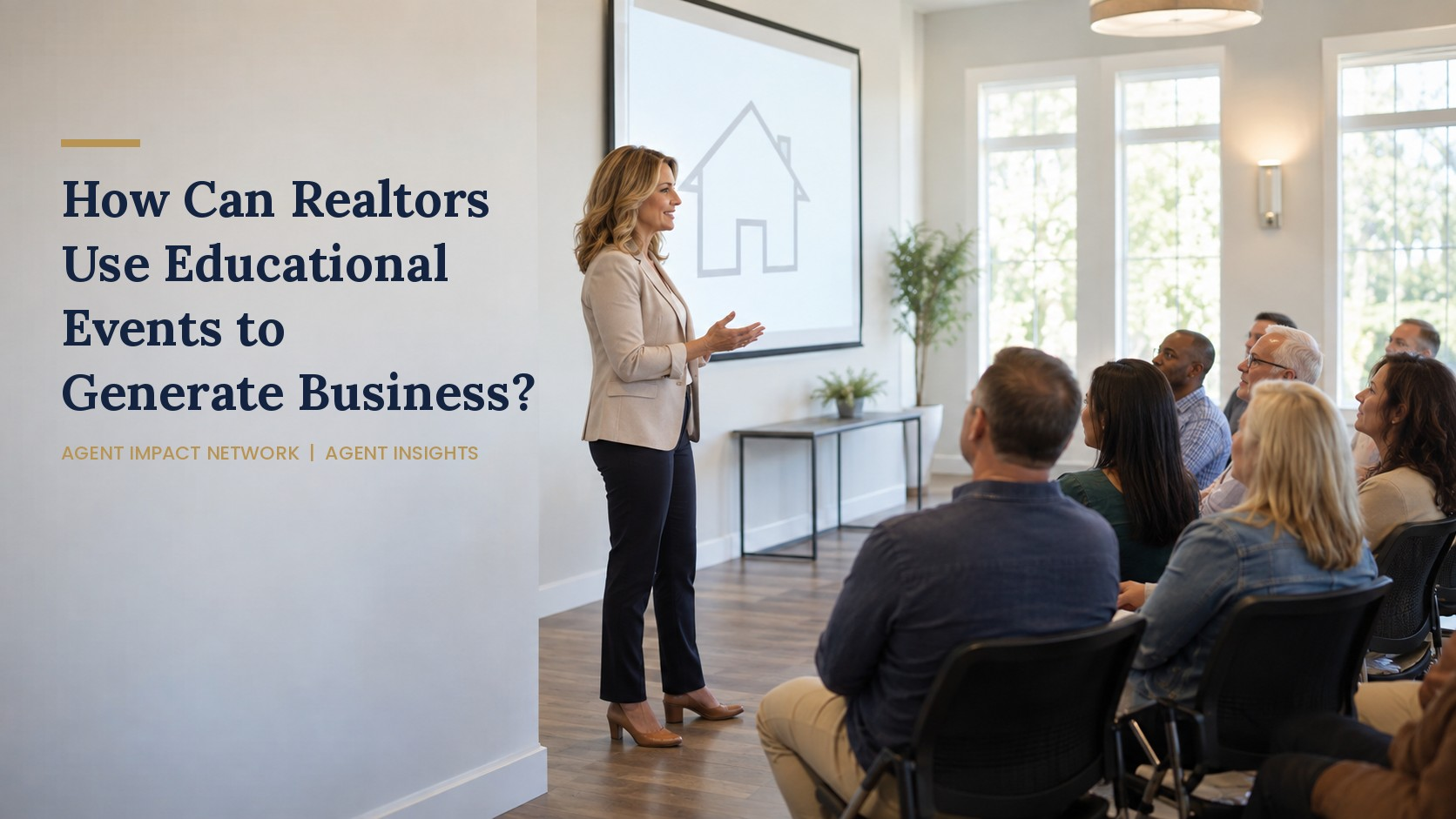
Most real estate agents do not need another “leads” seminar. They need a reason for people to trust them before they are ready to buy or sell.
That is why educational events can outperform many traditional lead generation tactics. A useful event gives prospects a low-pressure way to meet you, ask questions, see how you think, and decide whether you are the right professional to call later.
Quick answer: How do educational events generate business for Realtors?
Realtors generate business from educational events by teaching practical information to a clearly defined audience, partnering with credible professionals, collecting permission-based contact information, offering one relevant next step, and following up consistently. The contrarian truth is simple: the best real estate events do not feel like marketing events. They feel like help.
Educational events generate business in five primary ways:
- They establish expertise. Teaching a complicated topic helps attendees see you as a knowledgeable guide.
- They create trust before a sales conversation. People become more comfortable working with you after experiencing your approach firsthand.
- They attract people with a clear need. Someone attending a first-time buyer seminar, investor workshop, or market update is already thinking about real estate.
- They create natural follow-up opportunities. You can continue the conversation with resources, consultations, market updates, and future events.
- They expand your referral network. Attendees, speakers, lenders, contractors, and other professionals can all become sources of real estate agent referrals.
The event itself is not the entire strategy. The business comes from combining useful education with intentional registration, relationship-building, and follow-up.
What types of educational events work best for Realtors?
The right event depends on the audience you want to serve and the type of business you want to build.
| Event type | Best audience | Natural partner | Next step to offer |
|---|---|---|---|
| First-time buyer seminar | Renters and prospective buyers | Mortgage lender | Private buyer strategy session |
| Local market update | Homeowners, buyers, and investors in your area | Lender or appraiser | Home value review or buyer consultation |
| Investor workshop | New and experienced investors | CPA, attorney, or property manager | Investment property search or portfolio review |
| Home maintenance class | Past clients and current homeowners | Contractor, inspector, or landscaper | Pre-sale preparation plan or annual home check-in |
1. First-time buyer seminars
First-time buyer seminars are one of the clearest ways to connect with renters and prospective buyers.
A strong seminar can cover the steps involved in buying a home, how preapproval works, down payment and closing cost considerations, the role of inspections and appraisals, common first-time buyer mistakes, and how buyers can prepare six to twelve months in advance.
Partnering with a lender can make the event more useful. The lender can explain financing questions while you explain the transaction process, local market conditions, and how you help clients make decisions.
The goal should not be to pressure attendees into signing an agreement that night. A better call to action is a private buyer strategy session or a personalized preparation plan.

2. Local market update events
A market update can position you as a reliable source of local information, especially when headlines are confusing or national trends do not match what is happening in your market.
A useful market update might include inventory levels, average days on market, price changes by neighborhood, buyer competition, seller concessions, pending sales activity, and interest rate trends and affordability considerations.
Avoid turning the presentation into a collection of statistics. Explain what the numbers mean for different groups:
- “What does this market mean if you are a first-time buyer?”
- “Should homeowners considering a move wait or prepare now?”
- “How are investors evaluating rental opportunities?”
- “Which neighborhoods are showing the strongest buyer demand?”
A recurring monthly or quarterly event can become part of your database strategy. Attendees may not be ready to transact today, but regular education keeps you visible when their plans change.
3. Investor workshops
Investor workshops can attract people who may become repeat clients, referral partners, or both.
Possible topics include evaluating a rental property, understanding cash flow, comparing long-term rentals and short-term rentals, estimating repair costs, analyzing neighborhood trends, building a real estate investment plan, and understanding the importance of professional tax and legal advice.
You do not need to present yourself as a tax, legal, or financial expert. Instead, bring qualified professionals into the conversation and clearly explain each person’s role.
An investor event can also lead to multiple types of business. An attendee may eventually need help buying a property, selling an investment, finding a property manager, or referring another investor to you.
4. Home maintenance classes
Home maintenance events are often overlooked because they do not appear to be direct sales events. That is exactly why they can work.
Consider hosting a class on preparing a home for seasonal weather, preventive maintenance homeowners should schedule, small improvements that protect property value, how to prepare for a future sale, understanding roofs, HVAC systems, plumbing, or drainage, or creating a realistic home maintenance budget.
A contractor, inspector, landscaper, or home service professional can co-host the event. Homeowners appreciate practical advice, and the professionals involved may become future referral partners.
The event also gives you a reason to reconnect with past clients without asking for business. You are offering something useful instead of sending another generic “just checking in” message.
How do educational events build authority and trust?
Authority is not created by simply saying you are an expert. It is created by consistently helping people understand important decisions.
Educational events build authority when you:
- Explain complex topics in plain language
- Use current and relevant local examples
- Answer questions honestly, and admit when a question requires another professional
- Avoid exaggerated promises
- Give attendees resources they can use after the event
- Continue providing useful information over time
Trust grows when the experience matches the promise. If your event is advertised as an educational session but becomes a long sales pitch, attendees will notice.
Teach first. Make the next step available. Let the quality of the conversation create the opportunity.
How should Realtors partner with lenders and other professionals?
Strategic partnerships can improve both the quality and reach of an event.
Potential partners include mortgage lenders, home inspectors, insurance professionals, real estate attorneys, CPAs, contractors, property managers, financial educators, and local business owners.
Before agreeing to co-host, establish clear expectations:
- Who is responsible for the presentation?
- Who manages registration?
- Who pays for the venue or promotion?
- How will attendee information be handled, and what follow-up is permitted?
- What disclosures are required?
- What topics is each professional qualified to address?
The Realtor should protect the educational quality of the event. Partners can add expertise and invite their own contacts, but the event should still serve the audience first.
Always follow your brokerage policies, local regulations, advertising rules, and applicable laws governing referrals and professional relationships. When a lender or other settlement service provider shares event costs, the arrangement needs to reflect actual value provided rather than a reward for referrals; RESPA Section 8, in Regulation X, is the rule that governs this, and your broker or an attorney can help you structure it correctly.
How do you turn an event into lead generation?
A well-attended event is not automatically a successful event. You need a simple system for turning attendance into relationships.
Before the event
Create a registration page that collects name, email address, phone number, area of interest, buying, selling, investing, or homeownership goals, and approximate timeframe.
Ask one useful qualifying question, such as:
“What is the most important question you want answered at this event?”
This helps you tailor the presentation and gives you a natural follow-up topic.
Promote the event through your email database, social media, personal invitations, local community groups, partner databases, your website, community calendars, and past client outreach.
Personal invitations usually make a major difference. Do not rely only on a social media graphic.
During the event
Make it easy for people to participate. Include a short welcome, practical education, time for questions, a brief introduction to each partner, a clear next step, and an opportunity for informal conversation.
Use a QR code or simple form for attendees who want a consultation, market analysis, buyer preparation plan, or investor conversation.
Avoid collecting contact information without explaining how you will use it. Be clear, respectful, and compliant with applicable communication laws. The FTC's CAN-SPAM guide covers the basics for the email follow-up that comes next.
After the event
Follow-up is where many Realtors lose the opportunity.
Within 24 to 48 hours, send:
- A thank-you message
- A summary of the main points
- Any promised resources
- Answers to questions you could not address
- A link to schedule the next conversation
- An invitation to your next educational event
Segment follow-up by interest and timeframe. Someone planning to buy next month should not receive the same message as someone researching the process for next year.
Record useful notes in your CRM, including questions asked, goals, timing, and potential referral connections.

Can educational events create real estate agent referrals?
Yes. Educational events can create referrals when attendees understand who you help and when you make introductions easy.
At the end of the event, you can say:
“If you know someone who is trying to understand this process, feel free to send them the recording or invite them to our next session.”
That approach is more natural than making a hard referral request.
You can also create referral opportunities by asking attendees to bring a guest, inviting past clients to educational sessions, connecting with agents in other markets, partnering with professionals who serve similar clients, hosting events with Realtors outside your immediate area, and following up with people who could benefit from another attendee’s expertise.
This is where real estate networking becomes more valuable than collecting business cards. The goal is not to meet as many people as possible. The goal is to build enough trust that people remember who you are, what you know, and who you can help. Over time that is how a national referral network gets built, one event at a time.
How can masterminds support an education-first business?
A real estate mastermind can help you improve your event strategy before you spend significant money on venues, advertising, or technology.
In a strong mastermind, agents can share event topics that are working, registration and follow-up systems, local partnership ideas, presentation strategies, questions prospects are asking, ways to turn one event into multiple pieces of content, and referral opportunities across markets.
Agent Impact Network uses live weekly masterminds and networking events to help Realtors build relationships, exchange practical ideas, and create stronger referral networks. These conversations can help agents move from isolated lead generation to a more collaborative approach to growing a real estate business.
Epique Realty also reflects an education-first approach through three agent benefits described in its published materials: free continuing education courses, including courses offered through partner schools; free one-on-one mentorship and private coaching for life; and free access to the Earth to Orbit coaching program, which includes training resources, progress tracking, and coaching support.
Availability, eligibility, and program details can change. If you want to know how those benefits would apply to you, book a call with Debbie Mauro.
What is the simplest educational event strategy to start with?
Start with one audience, one problem, and one next step.
For example:
- Audience: Renters in your local market
- Problem: They do not understand how to prepare to buy
- Event: First-Time Buyer Preparation Workshop
- Partner: A qualified lender
- Next step: A private homebuying strategy session
- Follow-up: A 30-day email sequence with helpful resources
Run the event once, review what worked, improve the process, and schedule the next one.
You can later add market updates, investor workshops, and home maintenance classes. Over time, the events become a library of educational content, a steady source of leads, and a reason to stay connected with your database. It is also one of the most reliable ways to get more business without cold calling all day.
The Realtors who benefit most are not always the ones hosting the biggest events. They are the ones who show up consistently, teach clearly, follow up thoughtfully, and build relationships long after the chairs are put away.
Final answer: What makes an educational event actually produce business?
Realtors can use educational events to generate business by teaching practical information to a clearly defined audience, partnering with credible professionals, collecting permission-based contact information, offering one relevant next step, and following up consistently.
First-time buyer seminars, market updates, investor workshops, and home maintenance classes can all create opportunities for clients and agent referrals. When these events are repeated over time, they help a Realtor become a trusted local resource instead of another agent competing for attention.
If you want more real estate networking, practical ideas for growing your business, and relationships that can lead to referrals, join the Agent Impact Network Facebook community.
You can also subscribe for event updates, education, and real estate resources at REARNSubscribe.com, or book a call with Debbie to talk through your first event.
Frequently Asked Questions
Do homebuyer seminars still work for real estate agents?
Yes, when they are taught rather than pitched. A first-time buyer workshop that explains the process, financing, and common mistakes attracts people who are already thinking about buying, and a private strategy session is a natural next step.
How many people need to attend a real estate event for it to be worth it?
Fewer than most agents think. A room of eight engaged attendees with a clear need, good notes in your CRM, and a follow-up plan will outperform fifty casual attendees you never contact again. Judge the event by conversations started, not seats filled.
Can a Realtor host an educational event with a lender?
Yes, and it usually makes the event more useful. Agree in advance who presents what, who pays for what, and how attendee information is handled, and follow RESPA and your brokerage's rules on shared marketing costs and referrals.
What should a Realtor send after an educational event?
Within 24 to 48 hours, send a thank-you, a short summary of the main points, any promised resources, answers to questions you could not cover, a link to book the next conversation, and an invitation to the next event. Segment by interest and timeframe.
What is the easiest educational event for a new agent to start with?
A first-time buyer preparation workshop with a lender partner. The audience is easy to find, the content is well defined, the lender covers financing questions, and the next step is a private homebuying strategy session.
How often should Realtors host educational events?
Consistency matters more than frequency. A monthly or quarterly market update that always happens builds more trust than a large event you run once. Start with one event, review what worked, improve it, and put the next one on the calendar.
Get the newsletter
I write IMPACT every week for real estate agents. What is working, what is not, what it actually costs, and the parts most people leave out.
It goes to 243,000 realtors. It is free, and if it stops being useful you can leave in one click.
About the author

Debbie Mauro is the founder of Agent Impact Network. She started investing in real estate in 2003 and bought and sold property for two decades before she ever got licensed. She now runs the network's Facebook group and Meetup groups, the weekly IMPACT newsletter, a weekly mastermind, and an AI lab for agents and investors. She is a licensed real estate agent with Epique Realty.
More about Debbie